Every year, lakhs of Hindu, Buddhist, Jain, and Bon devotees dream of reaching Kailash Mansarovar -- the legendary abode of Lord Shiva in Tibet. Yet very few actually complete the pilgrimage. The reasons are stark: a Chinese visa lottery, Rs 2.5 Lakh+ in costs, a gruelling 52km high-altitude trek, and a yatra that depends heavily on India-China diplomatic relations.
That is where Adi Kailash enters the picture -- not as a lesser substitute, but as a sacred pilgrimage in its own right. As a local ground operator physically based in Pithoragarh, our team at Rudraansh Yatra has helped hundreds of pilgrims each year reach both Adi Kailash and (for those who qualified) Kailash Mansarovar. This guide gives you the unfiltered, boots-on-the-ground comparison.
📖 In This Guide
- What is Adi Kailash (Chhota Kailash)?
- What is Kailash Mansarovar (Mount Kailash)?
- Key Differences at a Glance
- Location and Geography
- Cost Comparison 2026
- Permit Requirements
- Physical Difficulty and Altitude
- Sacred Lakes: Parvati Sarovar vs Mansarovar
- Spiritual Significance
- The Bonus: Om Parvat on the Adi Kailash Route
- Who Should Choose Which Yatra?
- Frequently Asked Questions
1. What is Adi Kailash (Chhota Kailash)?
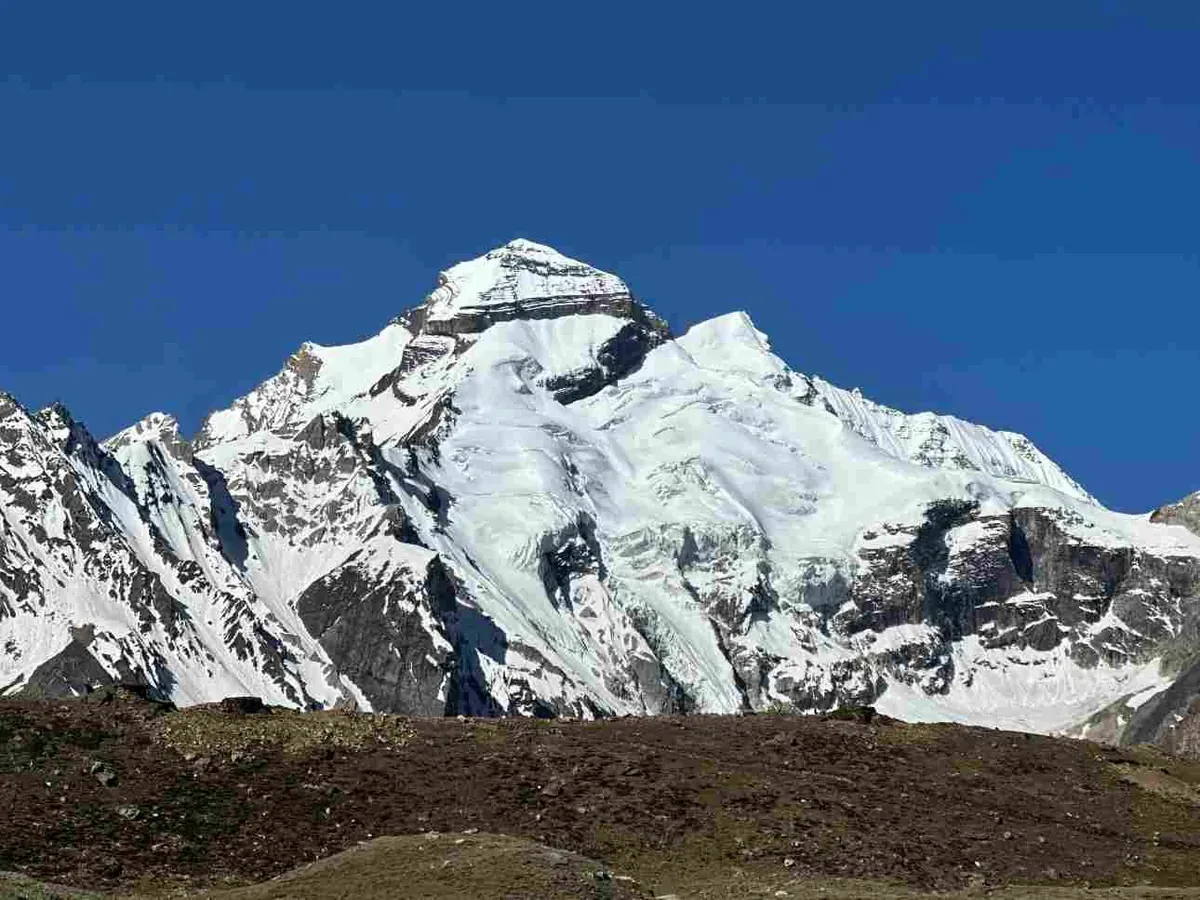
Adi Kailash, also known as Chhota Kailash, Baba Kailash, or Jonglingkong Peak, is a sacred Himalayan peak located in the Vyas Valley of Pithoragarh district, Uttarakhand, India. It stands at approximately 5,945 metres and is revered as the earthly Indian replica of Mount Kailash in Tibet.
Ancient Hindu scriptures, including the Skanda Purana, describe Adi Kailash as one of the five sacred Himalayan Kailashes (Panch Kailash) where Lord Shiva resides. The word "Adi" in Sanskrit means "first" or "original" -- indicating its primacy as the original Kailash within India's sacred geography.
At the base of Adi Kailash lies the Jyolingkong valley at 4,570 metres -- home to the sacred Parvati Sarovar (also called Gauri Kund) and a Shiva temple. This is the actual darshan point for pilgrims during the yatra.
2. What is Kailash Mansarovar (Mount Kailash)?
Mount Kailash (also called Kailash Parvat, Gang Rinpoche in Tibetan) is a peak in the Kailash Range of the Tibetan Autonomous Region of China. At 6,638 metres, it is considered the most sacred mountain in the world -- revered by Hindus as the throne of Lord Shiva, by Buddhists as the home of Chakrasamvara, by Jains as the site of enlightenment of Adinath, and by Bon practitioners as the seat of all spiritual power.
The Kailash Mansarovar Yatra includes both Mount Kailash and Lake Mansarovar -- a vast sacred lake at 4,590 metres. The journey includes a parikrama (circumambulation) of the mountain over 3 days -- a 52km trek reaching Dolma La Pass at 5,636 metres.
The Indian route enters Tibet via the Lipulekh Pass (5,334m) in Pithoragarh district. The yatra is organised by the Ministry of External Affairs (MEA) of India in coordination with the Chinese government, typically running June through September.
3. Key Differences at a Glance
| Factor | 🌍 Adi Kailash (Chhota Kailash) | 🌈 Kailash Mansarovar (Tibet) |
|---|---|---|
| Country | India (Uttarakhand) | Tibet, China |
| Peak Altitude | 5,945m (darshan at 4,570m) | 6,638m (parikrama at 4,900-5,636m) |
| Sacred Lake | Parvati Sarovar / Gauri Kund (4,570m) | Lake Mansarovar (4,590m) |
| Cost (2026) | Rs 18,000 - Rs 35,000 per person | Rs 1.8 - 2.5+ Lakhs per person |
| Trekking Required | No -- fully drive-based (4x4) | Yes -- 52km parikrama over 3 days |
| Passport Needed | No -- only Aadhaar Card | Yes -- valid Indian Passport |
| Foreign Visa | No visa required | Chinese Group Visa (MEA-processed) |
| Permit Type | Inner Line Permit (ILP) from Dharchula SDM | ILP + Alien Travel Permit (Tibet) |
| Diplomatic Dependency | None -- 100% within India | Yes -- depends on India-China relations |
| Duration | 3-6 days from starting point | 14-21 days including travel to Lipulekh |
| Physical Fitness | Low -- suitable for seniors aged 60-75 | High -- not recommended for seniors |
| Group Size | Flexible -- private or group | Fixed batches (22-24 per batch, MEA lottery) |
| Availability | May-October; book any date | 10 batches in 2026; uncertain each year |
| Om Parvat Darshan | Included -- on same route | Not on Mansarovar route |
| Scriptural Reference | Skanda Purana (Panch Kailash) | Skanda Purana, Vedas, Buddhist and Jain texts |
4. Location and Geography
Adi Kailash is situated in the Vyas Valley of Pithoragarh district, at the India-Nepal-China trijunction region. The approach runs via Dharchula town (915m) along the Kali River through Nabi/Gunji village (3,200m) before ascending to Jyolingkong (4,570m). The entire route lies within Indian territory, though it passes through restricted border zones requiring the ILP.
Mount Kailash is in the Ngari Prefecture of Tibet, approximately 90km north of the India-Tibet border at Lipulekh Pass. To reach it from India, pilgrims cross from Pithoragarh through Dharchula, Gunji, Nabi, and Kalapani before crossing Lipulekh Pass into China. Once inside Tibet, they reach Purang (Taklakot) and then Darchen -- the base for the Kailash parikrama.
5. Cost Comparison 2026
| Cost Element | Adi Kailash 2026 | Kailash Mansarovar 2026 |
|---|---|---|
| Ground Package (transport, stay, meals) | Rs 18,000-35,000 (all-inclusive) | Rs 80,000-1,20,000 (KMVN fees) |
| Permit Fee | Rs 0 (included by operator) | Rs 2,000-5,000 (ILP) + ATP fees |
| Passport / Visa Fees | Rs 0 (no passport needed) | Rs 3,000-6,000 (passport + Chinese visa) |
| Air Travel | Optional / Rs 8,000-15,000 | Rs 12,000-25,000 (mandatory for most batches) |
| Helicopter Sections | Not required | Rs 20,000-50,000 |
| Tibet Ground Arrangements | Not applicable | Rs 40,000-70,000 |
| Mule / Porters for Parikrama | Not required -- fully by vehicle | Rs 8,000-15,000 |
| Medical / Insurance | Recommended: Rs 2,000-5,000 | Mandatory: Rs 10,000-20,000 |
| TOTAL ESTIMATED COST | Rs 18,000 - 40,000 | Rs 1,80,000 - 2,50,000+ |
Adi Kailash 2026 Package Prices (Rudraansh Yatra)
All packages include ILP, 4x4 Bolero, Bhotiya tribal homestay, all meals, local guide, oxygen cylinder, and first-aid. No middlemen -- direct pricing from Pithoragarh.
6. Permit Requirements
For Adi Kailash
You need only an Inner Line Permit (ILP) from the SDM office, Dharchula. No passport. No foreign visa. Required documents:
- Aadhaar Card -- colour scan, both sides
- Police Verification Certificate (PCC) -- from your local police station
- 4 Passport-Size Photographs
- MBBS Medical Fitness Certificate -- certifying fitness for high altitude
Rudraansh Yatra handles the entire ILP process -- you just share documents via WhatsApp 15 days before departure. No office visits required from your side. Read our step-by-step ILP guide.
For Kailash Mansarovar
- Valid Indian Passport (minimum 6 months validity beyond return date)
- Chinese Group Tourist Visa -- processed by MEA; individual visas for Tibet not issued
- MEA Lottery Selection -- applications submitted to Ministry of External Affairs
- Inner Line Permit for the Indian side (Pithoragarh-Lipulekh)
- Alien Travel Permit (ATP) for Tibet -- arranged via KMVN or MEA-approved agents
- Tibet Travel Permit -- additional permit for restricted areas in Tibet
- Mandatory medical examination by MEA-designated doctors before final selection
7. Physical Difficulty and Altitude
| Physical Factor | Adi Kailash | Kailash Mansarovar |
|---|---|---|
| Maximum Altitude Experienced | 4,570m (Jyolingkong) | 5,636m (Dolma La Pass, parikrama) |
| Trekking Distance | Negligible -- short walks at darshan points | 52km parikrama trek over 3 days |
| Mode of Travel | 4x4 Bolero (fully motorable) | Trek / mule / helicopter combinations |
| Senior Citizens (60-75) | Suitable -- no trekking required | Not recommended -- extreme physical demand |
| Acclimatization Nights | 1 night at Gunji/Nabi (3,200m) | 3-5 acclimatization nights required |
| AMS (Altitude Sickness) Risk | Moderate -- drive-based reduces risk | High -- prolonged exposure at 5,000m+ |
| Oxygen Availability | Carried in all vehicles by Rudraansh Yatra | Limited in Tibet; pilgrims must carry supply |
| Typical Recovery Time After Yatra | 1-2 days | 1-2 weeks for most pilgrims |
The Kailash Mansarovar parikrama involves crossing Dolma La Pass at 5,636 metres -- one of the highest trekking passes in the world. At this altitude, oxygen levels are roughly 50% of sea level. Many pilgrims experience acute mountain sickness (AMS), pulmonary oedema, or cardiac events. The MEA strictly enforces age limits and medical eligibility for this reason.
Adi Kailash reaches a maximum of 4,570 metres at Jyolingkong and the approach is by vehicle throughout. Most pilgrims report only mild symptoms (headache, mild fatigue) which pass with rest and hydration.
8. Sacred Lakes: Parvati Sarovar vs Lake Mansarovar
Both yatras are defined not just by the mountain, but by the sacred lake at its base. Understanding the relationship between these two lakes is key to understanding Adi Kailash's spiritual equivalence.
Lake Mansarovar (Tibet)
Lake Mansarovar is one of the world's highest freshwater lakes at 4,590 metres above sea level in the Tibetan Autonomous Region. Spanning approximately 412 square kilometres, it sits at the southern foot of Mount Kailash. Hindus believe that Brahma created the lake in his mind (manas) -- hence Manasarovar. A sacred bath in Mansarovar is believed to wash away the sins of countless lifetimes.
Parvati Sarovar / Gauri Kund (Adi Kailash)
Parvati Sarovar (also called Gauri Kund) is the sacred lake at the foot of Adi Kailash in Jyolingkong valley at 4,570 metres -- just 20 metres lower than Mansarovar. The Skanda Purana and Shiva Purana explicitly describe Parvati Sarovar as the Indian mirror of Lake Mansarovar. Pilgrims who bathe in Parvati Sarovar and perform puja at the adjacent Shiva temple are believed to receive the same spiritual merit (punya) as those who bathe in Mansarovar.
9. Spiritual Significance -- Are They Equal?
This is the question most pilgrims genuinely want answered: Is Adi Kailash spiritually as significant as Kailash Mansarovar?
According to Hindu scriptural tradition, the answer is a clear yes. The Panch Kailash teaching in the Puranas recognises five sacred Kailashes in the Himalayan region. Adi Kailash is specifically called the most accessible Kailash for Indian devotees who cannot reach Tibet.
The three primary distinctions in spiritual terms are:
- Adi Kailash is entirely within India -- no foreign crossing required -- making it the preferred Shiva abode for Indian pilgrims
- Kailash Mansarovar is the original abode described across the widest range of scriptures (Hindu, Buddhist, Jain, Bon) and revered globally
- The parikrama of Mount Kailash (circumambulation of the peak) is a spiritually unique practice not replicated at Adi Kailash -- considered the most powerful merit-generating act in multiple traditions
10. The Bonus: Om Parvat -- Exclusive to the Adi Kailash Route
One of the most extraordinary features of the Adi Kailash yatra is Om Parvat -- a sacred Himalayan peak near the India-Nepal-China trijunction where the divine symbol "OM" (ॐ) appears naturally etched in snow on the mountain face. This is not a human creation -- it is a natural formation of permanent snow fields on the cliff face that forms the unmistakable shape of the sacred mantra.
Pilgrims view this from the Nabidhang viewpoint at 4,246 metres, on the way back from Adi Kailash. Many who have completed both the Mansarovar Yatra and the Adi Kailash Yatra report that the Om Parvat darshan at Nabidhang is among the most emotionally overpowering experiences they have ever had.
Read our complete guide: Om Parvat Darshan 2026 -- Everything You Need to Know.
11. Who Should Choose Which Yatra?
| Your Situation | Recommended Yatra | Reason |
|---|---|---|
| Senior pilgrim (60-75), no trekking | Adi Kailash | Fully drive-based, no physical strain |
| Budget conscious (Rs 20,000-40,000 range) | Adi Kailash | 5-8x cheaper than Mansarovar |
| No passport / first pilgrimage | Adi Kailash | Only Aadhaar and ILP needed |
| Wants Om Parvat darshan | Adi Kailash | Om Parvat is on the Adi Kailash route |
| Flexible dates, no lottery wait | Adi Kailash | Book anytime May-October |
| Families with children, first Himalayan trip | Adi Kailash | Safe, fully organised, no extreme altitude |
| Serious trekker, peak physical fitness | Kailash Mansarovar | 52km parikrama is the spiritual quest |
| Multi-religion significance (Buddhist, Jain) | Kailash Mansarovar | Mount Kailash revered across 4 religions |
| Wants parikrama of sacred mountain peak | Kailash Mansarovar | Circumambulation only possible at original peak |
| Can secure MEA lottery + Chinese visa | Kailash Mansarovar | Ultimate pilgrimage if all conditions align |
12. Frequently Asked Questions
In Summary
Both Adi Kailash and Kailash Mansarovar are profoundly sacred, life-changing Himalayan pilgrimages. They are not competitors -- they serve different pilgrims at different stages of their spiritual and physical journey.
If you are an Indian pilgrim who wants to reach Lord Shiva's abode in the Himalayas, who values accessibility, safety, affordability, and the bonus of Om Parvat darshan -- Adi Kailash is your yatra. It is entirely within India, costs a fraction of Mansarovar, requires no passport or foreign visa, and is open to senior citizens, families, and first-time Himalayan pilgrims.
If you are a physically fit, spiritually advanced pilgrim who wishes to complete the ancient parikrama of Mount Kailash itself -- Kailash Mansarovar remains the ultimate Himalayan pilgrimage.
For guidance on planning either yatra from Pithoragarh, WhatsApp our team -- we are born and raised here, and this is our home.
Related Guides from Rudraansh Yatra
- Adi Kailash Yatra Complete Guide 2026 -- Route, Cost, Itinerary
- Om Parvat Darshan Guide 2026 -- How to See the Sacred OM in Snow
- Inner Line Permit for Adi Kailash -- Step-by-Step 2026
- Adi Kailash vs Mount Kailash -- Detailed Comparison (Cost, Difficulty, Permits)
- Kailash Mansarovar Yatra 2026 -- 10th Batch Welcomed at Tanakpur