When Does Adi Kailash Yatra 2026 Close for Winter? Closing Dates, Snowfall & Last Batch Guide | Rudraansh Yatra
Executive Quick Answer: Adi Kailash Yatra 2026 Winter Closure Schedule
The Adi Kailash and Om Parvat Yatra officially closes for the winter season on November 10, 2026. Final civilian 4x4 Bolero batches depart from Dharchula between November 3 and November 5, 2026, with the Sub-Divisional Magistrate (SDM) Office Dharchula ending all Inner Line Permit (ILP) issuance on November 3, 2026 at 5:00 PM IST. The route remains completely closed to all civilian tourists and pilgrims for 6 months until the official spring reopening between May 10 and May 15, 2027.
1. Official Closing Date: When Does Adi Kailash Yatra Close in 2026?
The Adi Kailash and Om Parvat Yatra officially concludes its annual pilgrimage season between early and mid-November. For the 2026 season, the official operational closing date is November 10, 2026. After this date, all civilian transit past the ITBP checkpoints at Tawaghat, Chialekh, and Garbyang is completely halted by administrative directive from the Sub-Divisional Magistrate (SDM) Office in Dharchula and Pithoragarh District Administration.
The final civilian 4x4 Bolero convoys for the 2026 season will depart from Dharchula between November 3 and November 5, 2026. These final batches are carefully escorted and monitored to ensure all pilgrims descend safely to lower elevations before the onset of unmanageable sub-zero freezes and heavy Himalayan blizzards that bury high-altitude passes under several feet of snow.
* Official Winter Closure Date: November 10, 2026
* Last Batch Departures from Dharchula: November 3 to November 5, 2026
* SDM Dharchula ILP Issuance Deadline: November 3, 2026 (5:00 PM IST)
* Expected First Heavy Snowfall at Jolingkong: Late October to Mid-November 2026
* Winter Suspension Duration: November 11, 2026 to mid-May 2027 (approx. 6 months)
* Spring 2027 Reopening Date: May 10 to May 15, 2027 (subject to BRO snow clearance)
If you are contemplating an autumn pilgrimage, understanding the rapid meteorological shifts of the Kumaon borderlands is imperative. While October offers the most pristine, cloudless mountain views of the entire year, November brings biting sub-zero temperatures that demand meticulous physical preparation and verified local operator coordination.
2. The 5 High-Altitude Ground Realities That Force Winter Closure
Unlike lower Himalayan shrines, the pilgrimage to Adi Kailash (5,945m), Parvati Sarovar (4,500m / 14,995 ft), and Om Parvat (5,590m) takes travelers directly into the sensitive Indo-Tibet-Nepal tri-junction. The decision to close the yatra for winter is driven by five unforgiving physical and operational realities:
* 1. Freezing of Natural Gravity Water Lines: High-altitude villages like Gunji (10,500 ft), Nabi (10,200 ft), and the advanced base at Jolingkong (14,500 ft) rely entirely on outdoor gravity water pipelines sourced from glacial streams. By the second week of November, daytime temperatures fail to rise above freezing, and night temperatures plunge to -10°C to -18°C. Pipelines freeze solid and burst, completely eliminating running water for cooking, sanitation, and hygiene.
* 2. Annual Tribal Transhumance Migration (Kooch): The native Rung (Shauka) community inhabiting the Byas and Darma Valleys has practiced seasonal transhumance for centuries. Between late October and early November, the entire civilian population packs their households, herds of sheep and goats, and migrates down to their winter residences in Dharchula and the lower Kali river valley (a migration locally celebrated as Kooch). Once the villagers depart, civilian homestays and village kitchens shut down completely until May.
* 3. Heavy Snowfall Accumulation & Avalanche Corridors: Starting mid-November, western disturbances dump 3 to 6 feet of dense snow across the high passes. The unpaved access roads between Gunji and Jolingkong, as well as the high ridgeline leading to Lipulekh Pass (17,060 ft), become impassable. The steep cliff sections around Najang, Budhi, and Chialekh face severe black-ice formation and rockfall triggered by freeze-thaw cycles.
* 4. BRO Snow-Clearing Protocol Prioritization: The Border Roads Organisation (BRO Project Hirak / 67 RCC) maintains military lifelines to border outposts. During deep winter, BRO heavy machinery (dozers and snow blowers) focuses exclusively on strategic defence axes. Secondary civilian spurs leading to temple viewpoints and Parvati Sarovar are deliberately left unplowed until the spring thaw.
* 5. ITBP & District Administration Border Checkpoint Closures: To prevent civilian strandings, hypothermia fatalities, and high-altitude pulmonary edema (HAPE) emergencies where medical air-evacuation is hindered by winter blizzards, the SDM Office Dharchula stops issuing civilian Inner Line Permits (ILPs). The ITBP 7th and 14th Battalions at Tawaghat, Chialekh, and Garbyang turn back all unauthorized private vehicles.
3. Autumn Month-by-Month Transition: September vs October vs November
Understanding the transition from post-monsoon reopening to deep-winter shutdown is critical for timing your yatra. The autumn pilgrimage window is remarkably compact—spanning just 8 weeks from reopening on September 15, 2026 to shutdown on November 10, 2026.
* Late September (Sept 15 – Sept 30): The Fresh Autumn Opening: The monsoon rains have departed, leaving lush alpine valleys and rushing waterfalls. Daytime temperatures are mild (12°C to 18°C in Dharchula; 6°C to 12°C in Gunji), and nights drop to 2°C to 5°C. Road surfaces are graded fresh by the BRO, and water supply is fully functional.
* October (Oct 1 – Oct 31): The Golden Window for Darshan: October is universally recognized as the absolute best month of the year for Adi Kailash and Om Parvat. The skies are cobalt blue with 100% cloud-free visibility. The sacred 'ॐ' snow formation on Om Parvat is crisp, pure white, and perfectly defined against black shale rock. Daytime temperatures hover between 8°C to 14°C, with nights dropping below freezing (-2°C to -6°C). Homestays operate at peak capacity with traditional woodfire tandoors.
* Early November (Nov 1 – Nov 10): The Final Batch Phase: Characterized by sharp, biting cold and crystal-clear mornings. Daytime temperatures at Jolingkong rarely exceed 2°C to 4°C, while nights plummet to -8°C to -15°C. Light snowfall flurries dust the peaks, and black ice forms on morning road tracks. Only robust, acclimatized travelers with high-grade thermal gear should undertake these final batches.
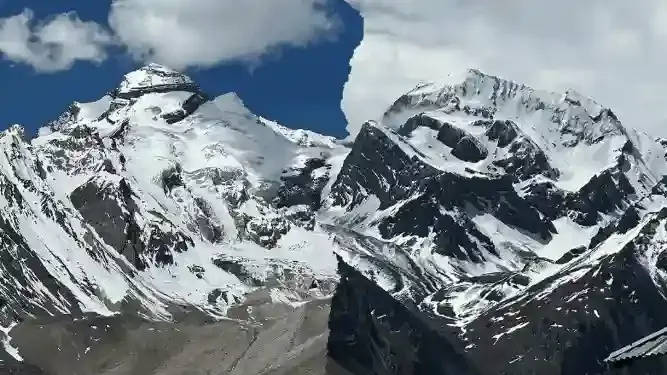
* Mid-November to April: Deep Winter Hibernation: Complete closure. The Byas Valley is cut off from civilian vehicle traffic. Parvati Sarovar freezes into solid turquoise ice, and snow blankets Jolingkong under 4 to 8 feet of powder. Only hardy ITBP and Indian Army border garrisons remain stationed at fortified posts.
4. Sector-by-Sector Accessibility & Weather Matrix: Dharchula to Jolingkong
The journey to Adi Kailash traverses dramatic elevation gradients—starting from 3,000 feet in Dharchula and ascending to nearly 15,000 feet at Parvati Sarovar. Each sector experiences winter onset at distinct intervals:
* Kathgodam to Pithoragarh (Altitude: 500m to 1,627m): Open 365 days a year. All-weather national highway via Almora and Jageshwar Dham remains completely unaffected by winter snow.
* Pithoragarh to Dharchula (Altitude: 1,627m to 915m): Open year-round. Scenic riverside road along the Kali river connecting Indian and Nepalese border towns.
* Dharchula to Tawaghat & Najang (Altitude: 915m to 1,400m): Open year-round for local traffic. Road is paved; subject to minor winter morning frost, but fully navigable.
* Budhi, Chialekh & Garbyang (Altitude: 2,740m to 3,150m): Early winter freeze begins late October. The grueling switchbacks of Chialekh ridge face strong high-altitude winds and frost. ITBP checkpoint enforces permit cutoffs.
* Gunji, Nabi & Napalchu (Altitude: 3,100m to 3,250m / ~10,500 ft): The heart of Byas Valley. Homestays operate with heated communal rooms until November 5–8, after which families commence their seasonal migration.
* Nabhidhang / Om Parvat Viewpoint (Altitude: 4,267m / 14,000 ft): Sub-zero conditions prevail throughout late October and November. The viewing platform provides breathtaking clarity of Om Parvat, but high wind chill drops effective temperatures to -15°C.
* Jolingkong & Parvati Sarovar (Altitude: 4,400m to 4,570m / 14,995 ft): The highest civilian destination. Completely shuts down by November 10. Lake surface freezes solid, and road tracks disappear under snow drifts.
5. Last Batch Departures 2026: Booking Timelines & SDM Permit Deadlines
Because high-altitude logistics require advance coordination with district administrative authorities, booking a late-season yatra requires adherence to strict deadlines:
* Final Booking Confirmation Deadline: October 20, 2026. This allows sufficient lead time for police background checks, government medical fitness certificates, and SDM permit filing.
* Last Batch Departure Schedule: Batch A departs Kathgodam on October 28; Batch B departs November 1; Final Batch C departs November 3, 2026.
* SDM Dharchula Permit Gate Closure: The Sub-Divisional Magistrate office ceases processing civilian Inner Line Permits on November 3, 2026 at 17:00 IST.
* Homestay Availability: In late October and early November, only designated winter-ready homestays in Gunji and Nabi remain operational with backup wood heating and hot water stoves. Advance reservation through a registered local operator like Rudraansh Yatra is non-negotiable.
6. Critical Packing & Cold-Weather Gear Checklist for Late-Autumn Yatris
Traveling to Adi Kailash in late October or early November requires high-altitude winter mountaineering layering. Cotton garments and light sweaters are dangerously inadequate. Follow our certified Himalayan operator packing checklist:
* 3-Layer Thermal System: Heavyweight merino wool or synthetic thermal innerwear (top and bottom) + thick fleece mid-layer + heavy windproof/waterproof down jacket rated for -15°C to -20°C.
* Head & Extremities Protection: Windproof balaclava or fleece beanie covering ears, polarized UV400 sunglasses (essential to prevent snow blindness), heavy waterproof gloves with inner thermal fleece liners, and 4–5 pairs of woolen trekking socks.
* Footwear: Sturdy, waterproof high-ankle trekking shoes with aggressive lug soles for gripping frozen mud and frost.
* Personal Medical Kit: Diamox (Acetazolamide) for Acute Mountain Sickness (under medical guidance), Camphor tablets for easier breathing, digital fingertip pulse oximeter, personal thermos flask (hot water freezes in regular plastic bottles within minutes), and chemical hand/foot warmers.
7. 2027 Reopening Preview: When Does Adi Kailash Open After Winter?
Following its 6-month winter closure, the Adi Kailash Yatra will reopen in mid-May 2027 (tentatively May 10 to May 15, 2027). The reopening sequence follows a precise annual timeline:
* April 1 to April 30, 2027: BRO Project Hirak initiates 'Operation Snow Clearance', deploying heavy earthmovers and specialized snow blowers to clear 10-foot drifts between Chialekh, Gunji, and Jolingkong.
* May 1 to May 5, 2027: Native Rung families return to Byas Valley in their upward spring migration, reopening village homes and prepping homestays.
* May 8 to May 12, 2027: District Magistrate Pithoragarh, SDM Dharchula, and ITBP inspect the motorable road, communication links, and medical outposts.
* May 15, 2027: Formal flagging off of the first pilgrim batch of the 2027 summer season.
8. Frequently Asked Questions (FAQ)
Here are verified answers to the most frequent queries asked by yatris planning late-season journeys:
* Can I visit Adi Kailash in December or January? Absolutely not. The yatra is strictly closed to all civilians from mid-November to May. Temperatures drop below -20°C, roads are buried under 5 feet of snow, and ITBP will turn back any civilian vehicle at Tawaghat.
* Is Parvati Sarovar frozen in late October or November? In late October, ice crystals begin forming along the lake edges. By early November, the lake surface partially freezes over, creating a magical crystal-blue mirror reflection of Adi Kailash peak.
* Can senior citizens travel in the late October or early November batches? Senior citizens in robust physical health can undertake October batches up to October 25. Batches in November are not recommended for seniors or pilgrims with cardiovascular conditions due to extreme cold and severe night hypothermia risks.
* How do I book the final batch of 2026? Contact Rudraansh Yatra directly via phone (+91 76176 17651) or WhatsApp. As a direct Pithoragarh-based operator, we manage your SDM permit, 4x4 Bolero transport, winterized homestays, and oxygen backup.
Book the Final 2026 Batches with Rudraansh Yatra
Certified Pithoragarh Direct OperatorLate-season high-altitude travel requires seasoned Himalayan navigators who monitor real-time weather forecasts, road grading updates from the BRO, and village migrations daily. With Rudraansh Yatra, you get dedicated 4x4 Bolero transport, guaranteed SDM permit processing, heated homestay rooms in Nabi and Gunji, supplemental emergency oxygen, and 24/7 on-ground assistance from native guides.